
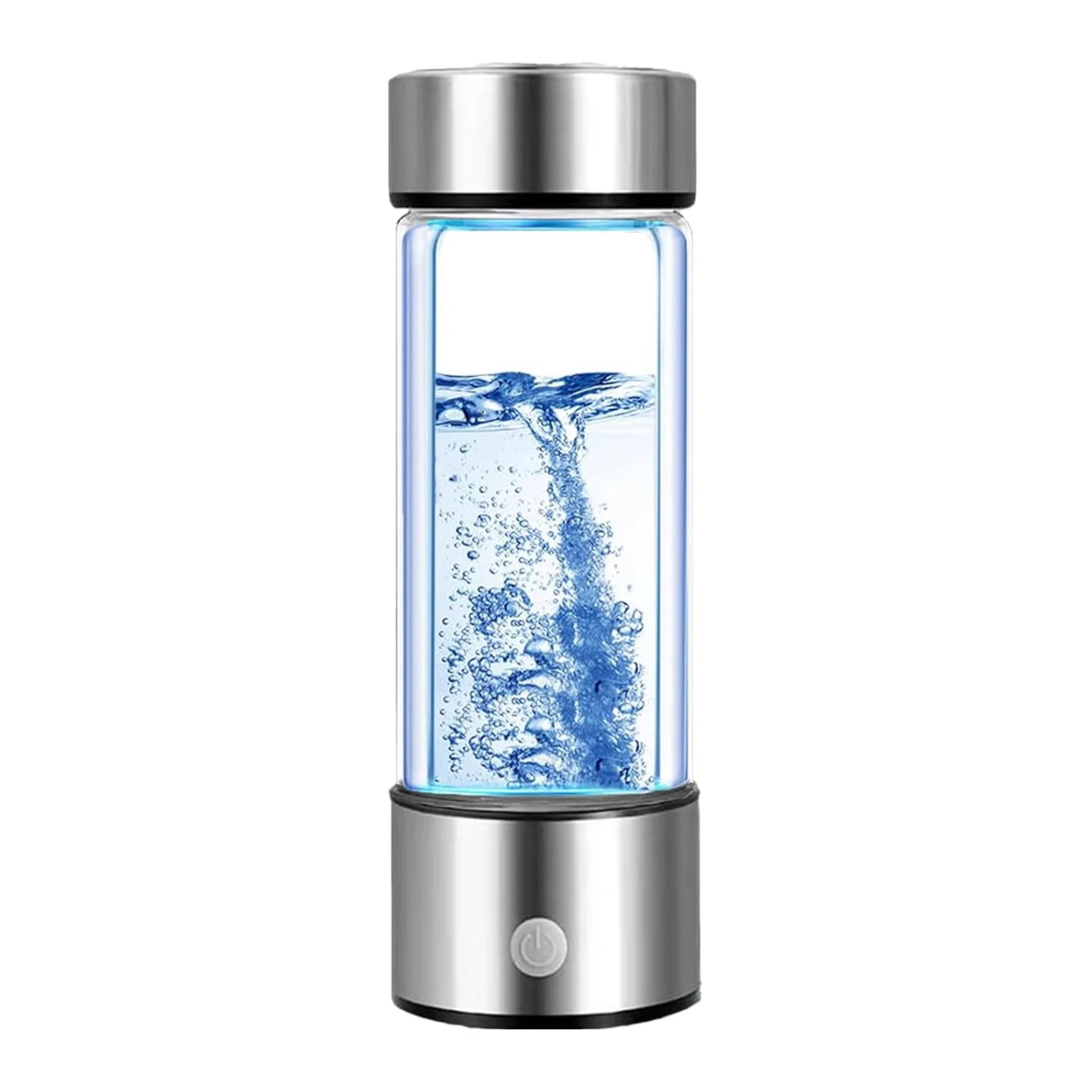
Hydrogen water has a trust problem, and it's not the science — it's the hardware. Hundreds of peer-reviewed studies exist on molecular hydrogen (H2). What's far less studied is whether the $30 bottle someone bought off a marketplace actually produces any H2 at all.
That gap is why this guide exists. Not "is hydrogen water good for you" — but "how do I know if the thing in my hand is working."
What PPB Actually Means
PPB stands for parts per billion — it's the concentration of dissolved molecular hydrogen gas in the water, by weight. It's the one number that tells you whether electrolysis happened, and how much.
For context, drinking-water studies and hydrogen-generator literature commonly reference outputs from a few hundred PPB up to 1,500–2,400+ PPB in higher-output consumer devices. Below roughly 300 PPB, you're likely getting a trace amount — closer to placebo than to the doses used in published research.
Why the Number Matters (Not Just Marketing)
Structure-function research on H2 points to a few consistent findings: it's the smallest molecule known, so it diffuses into cells and across the blood-brain barrier more readily than larger antioxidants; it selectively targets the most damaging free radicals while leaving beneficial signaling molecules alone; and it may support the body's own antioxidant enzyme systems (SOD, catalase) along with markers tied to exercise recovery and oxidative stress.
None of that happens if the water in your bottle isn't actually hydrogen-rich. A bottle with a light-up display and a "PPM" claim on the box isn't the same as a bottle with a verified number in the water you're about to drink.
Why Some Generators Fake It
Not all hydrogen generators are built the same, and this is the part most listings don't explain.
Real hydrogen-rich water is made through electrolysis: running a current through water to split H2O into hydrogen and oxygen. The quality of that reaction depends entirely on the membrane doing the splitting.
Devices built with a proper SPE (solid polymer electrolyte) or PEM (proton exchange membrane), paired with titanium or platinum-coated electrodes, isolate the hydrogen gas cleanly. Devices built without that membrane — the cheap, unbranded generators that show up on marketplaces — can produce unwanted byproducts instead, including trace chlorine and ozone. That's a genuine safety and efficacy gap, not a marketing talking point.
Three Ways to Test Your Hydrogen Water at Home
- Dissolved-hydrogen test drops or reagent kits. These work like pool-test kits: add a drop, compare the color change to a reference chart. They're inexpensive, give you a real PPB range, and are the closest thing to a lab reading you can do on your kitchen counter.
- A handheld H2/ORP meter. More precise than drops, reusable, and gives you a numeric readout instead of a color match. Worth it if you're testing more than one bottle or want to track consistency over time.
- The smell-and-taste check (a rough first pass, not a substitute for testing). Water from a properly built generator should taste clean, with no chemical odor. A chlorine or metallic smell is a red flag that points toward a non-PEM device — test it properly before continuing to use it daily.
Red Flags That Your Bottle Isn't Really Working
- No PPB or PPM number listed anywhere on the product or packaging — only vague wellness language.
- A "hydrogen generator" that doesn't specify SPE/PEM membrane technology.
- A chemical, chlorine-like, or metallic smell after activation.
- Reviews mentioning the LED display turns on with no other changes to the water.
- A price point far below what electrolysis-grade titanium/platinum components typically cost to manufacture.
What to Look For Instead
A hydrogen water bottle worth using should list its tested PPB output, specify SPE/PEM membrane construction with titanium or platinum electrodes, and ideally give you a way to verify the output yourself rather than asking you to take a number on faith. Transparency and testability are the actual differentiators in this category — not the flashiest packaging.
FAQ
What's a good PPB level for hydrogen water?
Published research on hydrogen water commonly uses concentrations in the hundreds to low-thousands of PPB. Higher-output consumer generators are typically built to reach 1,000–2,400+ PPB, while lower-output devices may fall under 300 PPB — closer to a trace amount than a dose used in studies.
Do hydrogen water bottles actually produce hydrogen gas?
Only if they use real electrolysis with a properly built membrane. A bottle with a display light and a "PPM" claim on the box isn't proof — the only way to know is to test the water's dissolved hydrogen directly with drops or a meter.
How can I test hydrogen water at home?
Dissolved-hydrogen reagent drops (similar to pool test kits) or a handheld H2/ORP meter are the two most accessible options. Both give you an actual PPB reading instead of relying on the manufacturer's claim.
Is it safe if my hydrogen water bottle smells like chlorine?
That smell often signals a generator without a proper proton-exchange membrane, which can produce chlorine or ozone byproducts instead of clean hydrogen gas. It's worth testing the water and, if the smell persists, discontinuing use of that unit.
How soon would I notice anything from hydrogen water?
Research on this varies by what's being measured — some exercise-related markers have shown change within about a week, while other quality-of-life measures were studied over 4–6 weeks. Individual results vary, and this is general research context, not a guarantee.
True Marqet builds hydrogen water bottles and pitchers with SPE/PEM membranes and titanium/platinum electrodes specifically so the PPB number on the box is one you can verify — not one you have to trust. Whatever your reason for choosing hydrogen water, our position is simple: you should be able to measure it.