
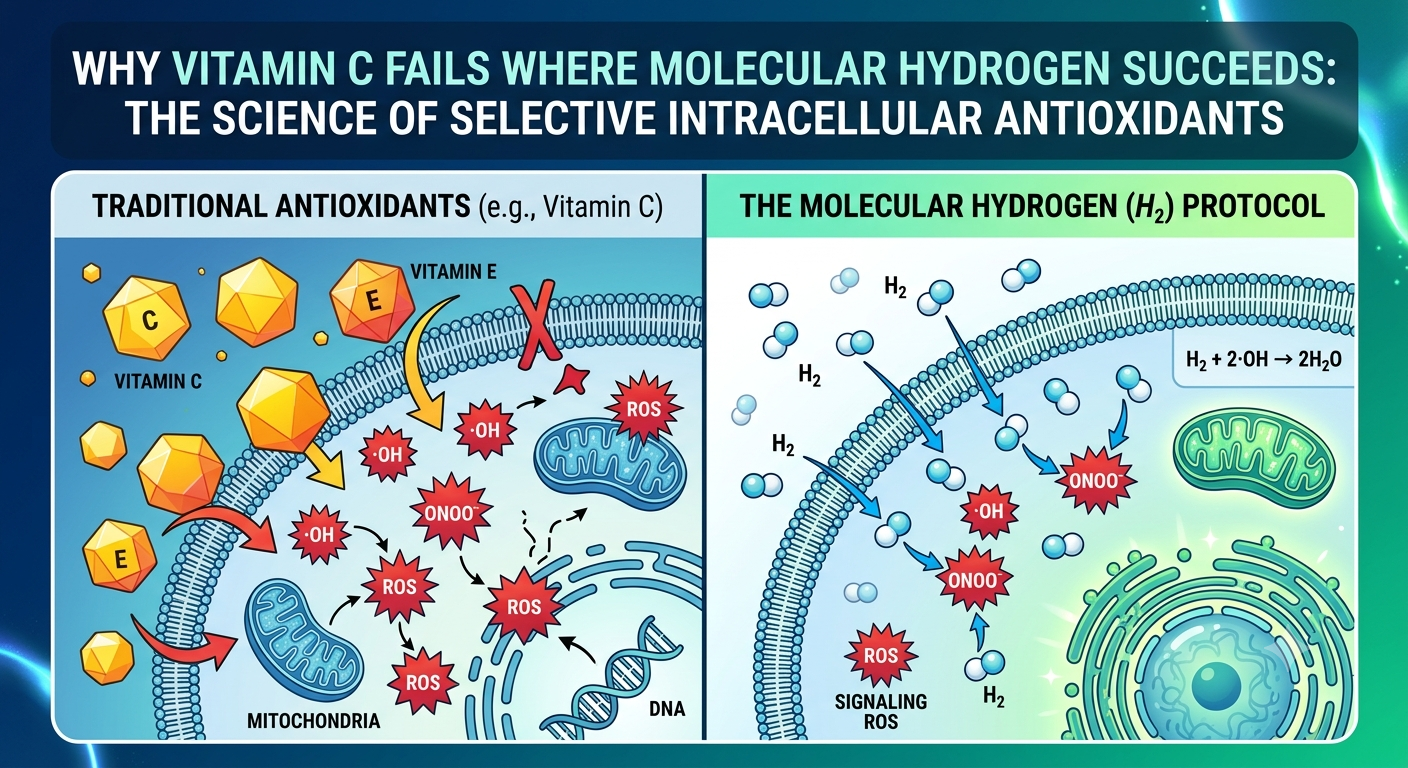
Why Vitamin C Fails Where Molecular Hydrogen Succeeds: The Science of Selective Intracellular Antioxidants
In the world of cellular optimization, traditional antioxidants like Vitamin C, Vitamin E, and beta-carotene have long been treated as health-promoting defaults. However, modern clinical biochemistry highlights a fundamental flaw in broad-spectrum antioxidant supplementation: non-selective scavenging.
When you flood your system with high-dose traditional antioxidants, they indiscriminately neutralize all reactive oxygen species (ROS). While this sounds beneficial on paper, it inadvertently disrupts essential biological processes. Your cells actively rely on specific, mild ROS (like hydrogen peroxide and nitric oxide) as vital signaling molecules to trigger immune responses, vascular dilation, and adaptive athletic recovery.
This is where molecular hydrogen (H2), frequently referred to as the "master antioxidant," fundamentally changes the therapeutic paradigm.
1. The Selectivity Protocol: Targeting Hydroxyl and Peroxynitrite Radicals
Oxidants stabilize themselves by stealing electrons from nearby molecules, a process that damages DNA, proteins, and cellular lipids. While standard metabolism naturally produces ROS as byproducts within the mitochondria, external stressors—such as high-intensity training, poor diet, and pollution—can overwhelm the body's internal defenses, accelerating conditions like Type 2 diabetes, Parkinson's, and cardiovascular disease.
Unlike conventional treatments, H2 functions as a selective antioxidant.
-
What it Neutralizes: Molecular hydrogen specifically isolates and reduces the most volatile and destructive free radicals: the hydroxyl radical (•OH) and peroxynitrite (ONOO-). These specific radicals possess no positive signaling function; their sole biological outcome is cellular and tissue destruction. When H2 meets a hydroxyl radical, it cleanly neutralizes it, turning the harmful oxidant into ordinary water (H2O).
-
What it Preserves: It leaves beneficial ROS completely untouched. Because H2 does not interfere with the signaling molecules required for cellular homeostasis, it maintains the body's natural redox balance without the "antioxidant paradox" associated with vitamin megadosing.
2. Unmatched Intracellular Accessibility
Beyond its chemical selectivity, molecular hydrogen possesses a distinct physical advantage over traditional supplements: size.
Relative Molecular Weights:
[H2 (2 g/mol)] <----------------------------------- Smallest (Easily Crosses BBB)
[Vitamin C (176 g/mol)] <-------------------------- Bulky (Requires Transporters)
[Vitamin E (430 g/mol)] <-------------------------- Heavy, Lipid-Bound
As the smallest element in the universe, H2 consists of a tiny molecular mass that allows it to easily diffuse through cell membranes. While regular water and bulkier compounds require active transport pathways or fail to cross the tightly regulated blood-brain barrier (BBB), H2 effortlessly penetrates directly into sub-cellular structures—specifically reaching the mitochondria and the nucleus where radical-induced DNA damage occurs.
Furthermore, H2 operates as a cellular signaling modulator. It activates the Nrf2 pathway, an internal defense mechanism that stimulates your body to produce its own endogenous antioxidant enzymes, including superoxide dismutase (SOD) and catalase. This creates a two-fold therapeutic impact: direct neutralization of toxic radicals alongside a systemic upgrade to your body's native defenses.
3. The Clinical Timeline: What to Expect Based on Human Data
Molecular hydrogen is backed by a growing body of research, including over 1,000 peer-reviewed studies and more than 200 human clinical trials across 170 disease models. The therapeutic effects are highly dependent on intake duration and follow a distinct chronological timeline:
| Timeline | Proven Clinical & Biomarker Adjustments | Key Study Focus Areas |
| 7 Days |
• No significant changes in aerobic capacity. • Marked improvements in anaerobic performance: higher peak power, elevated mean power, and a lower fatigue index. • Reduced post-exercise blood lactate and improved perceived exertion. |
Exercise Physiology & Sports Medicine |
| 28–30 Days |
• Measurable decrease in liver fat buildup. • Downregulation of age-related cognitive decline markers. • Subjective improvements in quality of life: reduced anxiety and lower baseline fatigue. |
Neurodegenerative & Hepatic Research |
| 6 Weeks |
• Mitigation of clinical side effects (nausea, headaches, alopecia) during radiation therapy for liver cancer. • Preserved quality of life scores and improved mood states during intensive medical treatments. |
Oncology Support & Radiation Therapy |
| 10–24 Weeks |
• Systematic reduction in systemic inflammation markers: lowered TNF-alpha, IL-6, and C-reactive protein (CRP). • Drop in fasting glucose, reduced triglycerides, and optimized total cholesterol-to-HDL ratios. • Modest improvements in overall Body Mass Index (BMI). |
Metabolic Syndrome & Cardiovascular Health |
4. Consumer Safety: The PEM/SPE Hardware Requirement
Because of the surging interest in hydrogen therapy, the market has seen an influx of low-cost, uncertified hydrogen water bottles. For consumers, choosing the wrong device introduces distinct biochemical risks.
⚠️ Critical Hardware Guardrail
Lower-quality hydrogen generators that use basic, unseparated electrolysis plate systems can yield highly toxic chemical mixtures. When tap or mineralized water containing chlorine or chloramines undergoes electrolysis without a specialized barrier, the process oxidizes these ions into chlorine gas and ozone—both of which are strong, hazardous oxidants that directly counteract the purpose of drinking an antioxidant beverage.
To ensure pure, therapeutic H2 delivery, look for devices utilizing SPE/PEM (Solid Polymer Electrolysis/Proton Exchange Membrane) technology with a dedicated exhaust system. A true PEM membrane (such as industry-standard DuPont Nafion membranes) selectively allows only positively charged hydrogen protons to cross into your drinking water, while diverting harmful oxygen, chlorine, and ozone byproducts out through a waste vent at the base of the bottle.
What Not to Expect (A Balanced View)
While H2 is highly non-toxic—as the human gut naturally generates hydrogen gas via bacterial fermentation—it is not a magical cure-all.
-
Digestive Adjustments: Introducing high concentrations of hydrogen water too rapidly can occasionally cause mild gastrointestinal adaptations, such as transient bloating or loose stools. It is best to introduce it gradually, starting with 1 to 2 cycles (approx. 400–800ml) per day, eventually scaling up to an optimal 4 bottles per day.
-
Tablet Hazards: If you opt for effervescent hydrogen generating tablets rather than an SPE/PEM machine, monitor your total intake. These tablets rely on elemental magnesium to generate H2 gas in water, meaning excessive daily consumption carries a risk of accidental magnesium oversupplementation.
For long-term systemic health, metabolic management, and clean athletic recovery, investing in a high-quality, lab-certified PEM hydrogen water generator offers a highly targeted, scientifically sound method for managing oxidative stress at its source.