
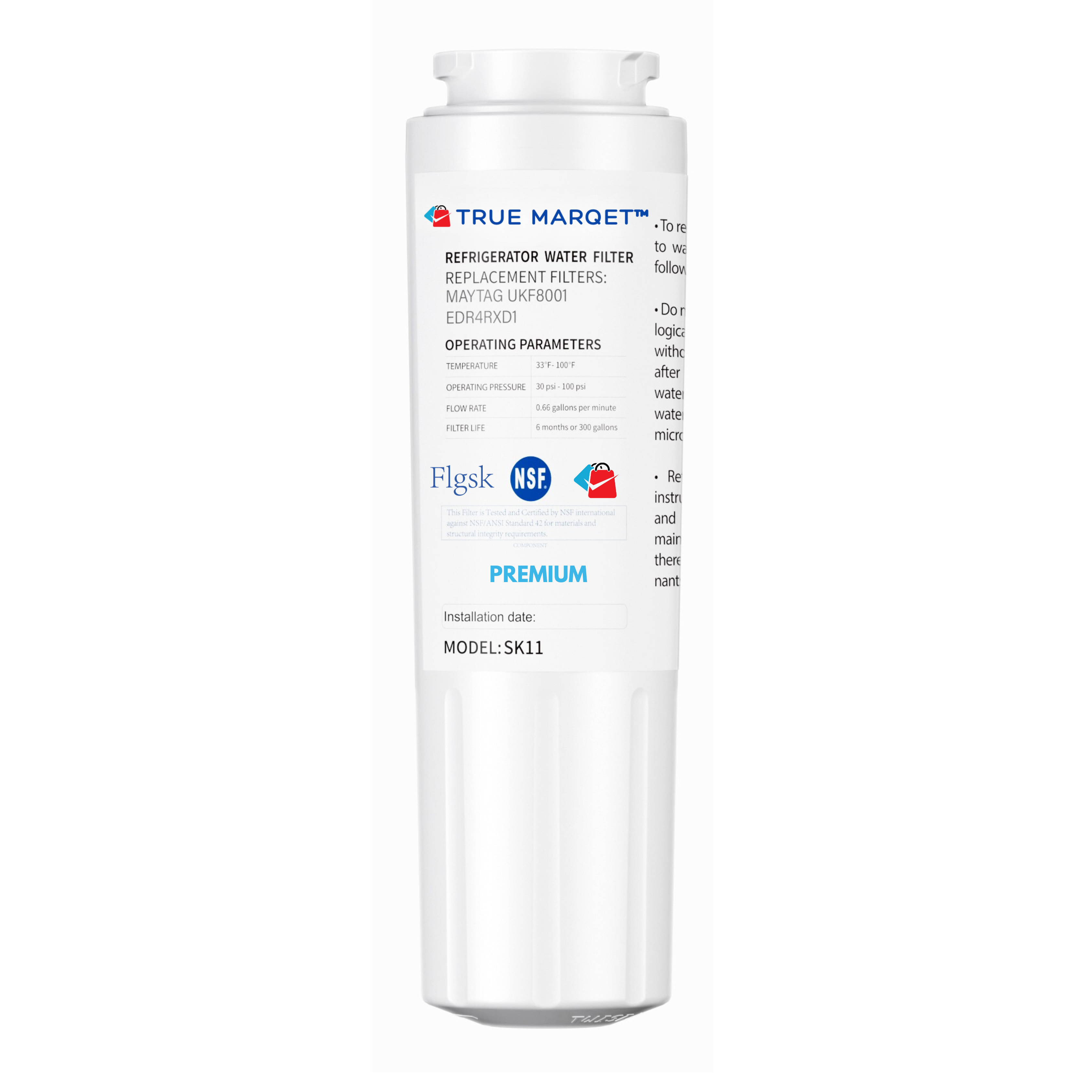
A refrigerator with a blinking filter light or a slow ice maker doesn't care whether "water filters" is your specialty. If you're a plumber out for a leaking supply line or an HVAC tech running a seasonal maintenance visit, you'll get asked about it anyway — especially in a rental unit or a property you service on contract. The question is whether you can close it today, or whether you're sending the customer to a big box store and possibly sending the next call to whoever they find there instead.
That's a stocking decision and a pricing decision. Most independent contractors buy filters the way they buy anything they don't sell often: one at a time, at retail, whenever a job happens to call for it. That works fine at low volume. Once the volume adds up — and for anyone doing appliance-adjacent service work, it does — the math is worth walking through.
The Call You're Already Getting
Property managers and maintenance departments are one documented buyer of refrigerator filters in bulk, but a lot of that same demand actually runs through independent plumbing and HVAC contractors — especially for smaller landlords, single-property owners, and property managers without an in-house maintenance tech. If you already handle the appliance side of a kitchen call — ice makers, supply lines, disposals — the filter is adjacent work you're already positioned to close, not a separate trip.
The problem shows up when the truck doesn't have the right part. A tech assumes "we carry the Whirlpool filter" and shows up to a Samsung fridge, or the reverse. Now it's a return trip, a second truck roll, and a customer who's had a slow ice maker for two extra weeks. None of that sinks a job on its own. It adds up across a route, and it's the kind of friction a competitor without the same gap can pick off.
One Truck, Six Filter Families
You don't need to carry every SKU ever made to cover most of what shows up on a residential or light-commercial route. A short list of filter families covers the large majority of refrigerators built over roughly the last fifteen years:
- Whirlpool / Kenmore / Everydrop — EDR1RXD1 / W10295370A
- Frigidaire / Electrolux / Pur — split across three non-interchangeable families depending on model year: FPPWFU01/PWF-1, ULTRAWF, and WF3CB
- GE — XWF / MWF
- LG — LT1000P / ADQ747935
- Samsung — DA29-00020B / HAF-CIN
- Bosch — Ultra Clarity Pro / BORPLFTR50
Add a Sub-Zero-compatible cartridge if your route includes higher-end built-in units, and that list covers most of what you'll run into. The trap is assuming brand loyalty means filter loyalty: Frigidaire alone has shipped three separate, non-interchangeable filters depending on the model year, so "we carry the Frigidaire one" is really a one-in-three chance of being right.
What a Missed Call Actually Costs
Both trades are short-staffed in ways that make a wasted trip more expensive than it used to be. The HVAC industry is short an estimated 110,000 technicians nationally (ACHR News), and plumbing is dealing with its own version of the same problem: the U.S. is forecast to face a shortage of roughly 550,000 plumbers, and more than 20% of the current plumbing workforce is already over 55 (Linxup's 2026 plumbing industry statistics, citing John Dunham and Associates and Consumer Affairs). That scarcity cuts both ways — it's good for wages, and it means every technician-hour on the schedule is worth more than it used to be.
A truck roll that ends in "I'll have to order that and come back" isn't just an inconvenience for the customer. It's a technician's morning spent on a job that now has to happen twice. ServiceTitan's own guidance to HVAC contractors on truck stocking makes the same point from the operations side: a properly stocked truck means fewer missed appointments, because techs make fewer return trips and complete more calls per day (ServiceTitan, "The Must-Have HVAC Truck Inventory List"). A filter is a small, cheap example of a part that either lives on the truck or turns into a second visit. There's not much in between.
That math matters more, not less, for a smaller operation. An estimated 70% of new HVAC businesses don't make it past their first year, per data ServiceTitan compiles from the U.S. Department of Energy's Better Buildings program. Margin discipline on small stuff isn't optional when the business itself is still proving it can survive.
The Margin Nobody's Pricing In
Here's the part that's easy to miss: a filter you stock and sell isn't just a service you're providing. It's a small profit center you're currently leaving on the table if you're buying retail on the way to a job.
Contractor pricing guides vary on the exact number, but the general pattern for HVAC and plumbing parts markup is consistent: standard materials get marked up 25–50%, while small parts and consumables are commonly marked up at least 100% — doubling your cost — with plenty of shops charging 300–400% on cheap items, since the markup on a small part also has to cover the fixed cost of the truck roll itself (Jobber's HVAC parts markup guide). A part that costs little and takes five minutes to install is exactly the kind of line item that's supposed to carry a fat margin, not a thin one.
Buying single units at retail leaves almost no room to do that. True Marqet's own online single-unit price for a filter like the SK62 (Frigidaire FPPWFU01/PWF-1) is $20.99 — reasonable for a one-off consumer order, but not much of a spread to mark up on an invoice. A wholesale account changes the input cost instead, and there's no minimum order quantity required to get there — a one-to-three-truck shop qualifies the same as a large distributor, and per-unit cost improves further as order size grows.
Stocking the Truck Without Overbuying
Filters are cheap enough that "just carry more of everything" sounds like a safe default. It isn't. Cash tied up in a shelf of filters you rarely install is cash that isn't paying for anything else, and ServiceTitan's own contractor guidance flags overstocking as one of the most common truck-inventory mistakes, right alongside carrying too little. The fix is the same one field-service guides recommend for any truck stock: track what actually gets used per technician or per route, set a minimum and maximum for each filter family, and audit weekly or biweekly instead of restocking on a hunch.
Long shelf life works in a contractor's favor here. Filters don't expire the way perishable inventory does, so buying a few months of volume in one wholesale order and distributing it across trucks is a reasonable way to use the no-MOQ structure without tying up more cash than the route actually needs.
Buying Wholesale vs. the Parts Counter
Once volume from even a handful of recurring calls adds up, sourcing filters one at a time from whatever supply house or big box store has them in stock stops making sense. True Marqet's wholesale program is built for buyers at exactly that stage — independent contractors included, not just large distributors:
- No minimum order quantity — pricing improves with volume, but there's no case-count threshold to clear first
- Freight, customs, and duties built into the quote, not added as a surprise later
- Free shipping on orders of $500 or more
- Long shelf life, useful for building truck and shop stock ahead of a busy season instead of ordering just-in-time
- Filters compatible with Whirlpool, Frigidaire, Pur, Samsung, LG, GE, Bosch, and more, from one supplier instead of chasing parts across several OEM channels
- PayPal, Payoneer, wire/ACH, and credit accepted, which covers most contractor AP setups without a special exception
One honest caveat worth passing on to your own customers: most of True Marqet's filters are certified to NSF/ANSI 42, which covers aesthetic reduction — chlorine, taste, and odor — not NSF/ANSI 53, which covers contaminants with a recognized health effect. That's standard for refrigerator filters generally, and it's worth knowing so nothing gets promised on an invoice that the part isn't certified to do.
If you also manage properties directly rather than only servicing them under contract, our guide to stocking refrigerator filters across a property portfolio covers the inventory-planning side in more depth.
Frequently Asked Questions
Can a small plumbing or HVAC business get wholesale pricing on refrigerator filters?
Yes. True Marqet's wholesale program has no minimum order quantity — pricing improves with volume, but there's no case-count threshold to clear just to open an account. A one-to-three-truck shop qualifies on the same terms as a large distributor.
What markup should I charge customers for a refrigerator filter replacement?
Contractor pricing guides commonly recommend at least 100% markup (doubling your cost) on small parts and consumables, with many shops charging 300–400% on cheap items, since the markup also has to cover the fixed cost of the service call itself, not just the part.
Which refrigerator filter brands should I keep stocked on my truck?
A short list covers most residential and light-commercial calls: Whirlpool/Kenmore/Everydrop, Frigidaire (split across three non-interchangeable filter families depending on model year), GE, LG, Samsung, and Bosch. Add a Sub-Zero-compatible cartridge if your route includes higher-end built-in units.
Are True Marqet's filters NSF certified?
Most are certified to NSF/ANSI 42, which covers aesthetic reduction — chlorine, taste, and odor. That's a different, independent certification from NSF/ANSI 53, which covers contaminants with a recognized health effect. Check the individual product listing before telling a customer a filter does more than reduce taste and odor.
How much filter inventory should a service truck carry?
There's no universal number, but the same principle applies as with any truck stock: track usage per technician or route, set a minimum and maximum stock level for each filter family, and restock from a weekly or biweekly audit rather than guessing. Overstocking ties up cash just as reactive ordering costs you truck rolls.
What payment methods does True Marqet's wholesale program accept?
PayPal, Payoneer, wire/ACH transfer, and credit card.
Ready to Open a Wholesale Account?
If you're still buying filters one at a time between jobs, a wholesale account is a low-effort way to stop leaving margin on the table and stop losing return visits to a part you didn't have on the truck. Visit True Marqet's wholesale program to see current pricing and terms, or email wholesale@truemarqet.com with the brands you run into most on your route — the team typically responds within one business day.